Two quotes can promise a “complete WordPress malware cleanup” while selling rather different jobs. One removes the files its scanner identifies. Another also reviews database content, access and the mechanism that puts the code back. The difference tends to appear just when you thought the incident was closed.
Our observed WordPress cleanup laboratory shows what a reviewable handover can contain: inventory, an intentionally incomplete cleanup, preservation of legitimate content and repeated verification. The changes are harmless demonstration data, with the recorded results available to download.
To compare WordPress malware removal services in 2027, ask for a proposal connecting the reported symptom, scope, intervention and acceptance evidence. This guide provides an original buying matrix and two fictional proposals to work through. It is not a vendor ranking or a price list. The year identifies this edition for commissioning the work.
If you need an assessment now, request a WordPress malware assessment with the public URL, symptom and approximate time. You do not have to solve the infection before asking for help. You should, however, know which job you are commissioning and what evidence will let you accept it.
Start with the incident, not the package name
Describe the original report: redirected visitors, spam content, a hosting alert, returning files or a browser warning. Preserve an example and its date. A website reopening does not establish that the cause has gone; an old warning does not identify what remains active.
Ask the initial assessment to distinguish observed facts, suspected causes and outstanding checks. A repair quote may depend on a diagnostic stage. If it does, establish what that stage delivers and when further approval will be requested.
For selective redirects, use the guide to WordPress redirecting visitors but not the administrator. For unexpected Google results without visible entries, use spam pages that do not exist in WordPress. Those guides narrow the symptom. This one helps you compare the commission.
Make both quotes describe the same estate
Identify the domain, installations, languages, staging environment and stores sharing the hosting account. Ask whether the price covers one installation, an account or several websites. Two domains may share files or permissions, while one domain can contain several applications.
List the integrations that matter to the business: forms, CRM, checkout, private downloads or publishing. Identify the people responsible for hosting, DNS and external accounts. Not every system needs intervention, but the supplier should be able to state where their responsibility ends.
Ask what happens if another compromised installation or a hosting-account problem is discovered. A useful answer defines the additional scope and approval. “We will deal with that later” is a line item you cannot yet compare.
A matrix for comparing deliverables
| Item | Ask the supplier | Delivery evidence |
|---|---|---|
| Scope | Which installations and layers will you review? | Inventory and exclusions |
| Cleanup | What will you remove, repair or replace? | Change record and provenance |
| Persistence | How will you investigate recurrence? | Findings, actions and limitations |
| Functionality | Which journeys will you repeat? | Agreed test results |
| Search and warnings | Who submits and follows up reviews? | Request, status and owner |
| Follow-up | What does recurrence cover include? | Terms and reporting channel |
Complete the same matrix for each offer. An unanswered cell does not automatically mean a poor service. It means a point needs clarification. Keep the answer with the quote so an informal conversation does not later become a different expectation.
A scan is one check, not the entire scope
Ask what the tool inspects: files, database content, public responses or reputation. Record when it runs and what it does not cover. Different results can come from different objects or collection times without either supplier necessarily being wrong.
The WordPress guidance for compromised sites treats investigation and recovery as a wider process than deleting a flagged file. Use that reference to ask for context, rather than demanding an identical procedure for every incident.
The proposal should explain how custom material will be reviewed and which components can be replaced from verified sources. Deleting everything containing a suspicious word can damage legitimate content, translations or required code. Ask how each change is decided and how a recovery option is preserved.
Ask what is known about entry and persistence
Removing visible code and correcting the mechanism that reinstalls it are different tasks. Ask the report to separate a confirmed cause, a hypothesis and an investigation limit. Missing logs should be recorded as missing, rather than filled with a persuasive explanation without evidence.
Ask whether identities, scheduled tasks and components related to the findings will be reviewed, and what requires coordination with hosting. A suspected compromise in another account may need permissions and a separate commission. The proposal should say how that boundary will be handled.
If a supplier promises to identify the exact cause every time, ask what evidence will support that conclusion. A necessary, well-supported correction may be possible even when the historical initial access cannot be established. For purchasing, you need to understand the verifiable outcome and the uncertainty that remains.
What the final report should contain
A useful report identifies scope and dates, findings, changes, replaced components, access actions, completed tests and outstanding work. Technical references should let the next responsible person understand what was inspected without distributing credentials or unnecessary malicious code.
Request concrete results for the agreed journeys. “Everything passed” does not say whether the supplier checked the form, mobile route, private login or just the homepage. Identify who verified each item and which environment they used.
Our guide to verifying malware cleanup beyond a green scanner develops the technical checks. Here you need to agree which checks are included, who performs them and how the results will appear in the report you receive.
Original example: two offers that are not yet comparable
Imagine a store with a public website and staging under the same account. Visitors have reported mobile redirects. Proposals A and B below are fictional: they do not describe real suppliers or an incident handled by our team.
Offer A: cleanup of one installation, review of flagged files and a final check using the same scanner. Database content, staging, the affected visitor route and a written handover are unspecified.
Offer B: assessment of the account and both installations, a recovery copy, approved intervention, change record and repetition of the affected route. Changes to external accounts would be quoted separately. An agreed follow-up review is included, without promising when external warnings will disappear.
Offer B describes more work, but it may still be the wrong scope. Before choosing, ask A to clarify the empty cells and B to explain why both installations require inspection. Compare the resulting scope, deliverable and fee. The longest document does not win merely by entering the competition.
A clear interface helps reading, not proof of cleanup
Nodus, by Tanzeel Ul Islam Badar, is a visual reference for an audit overview. We include it to examine information organisation. We have not tested the product or its security outcomes.
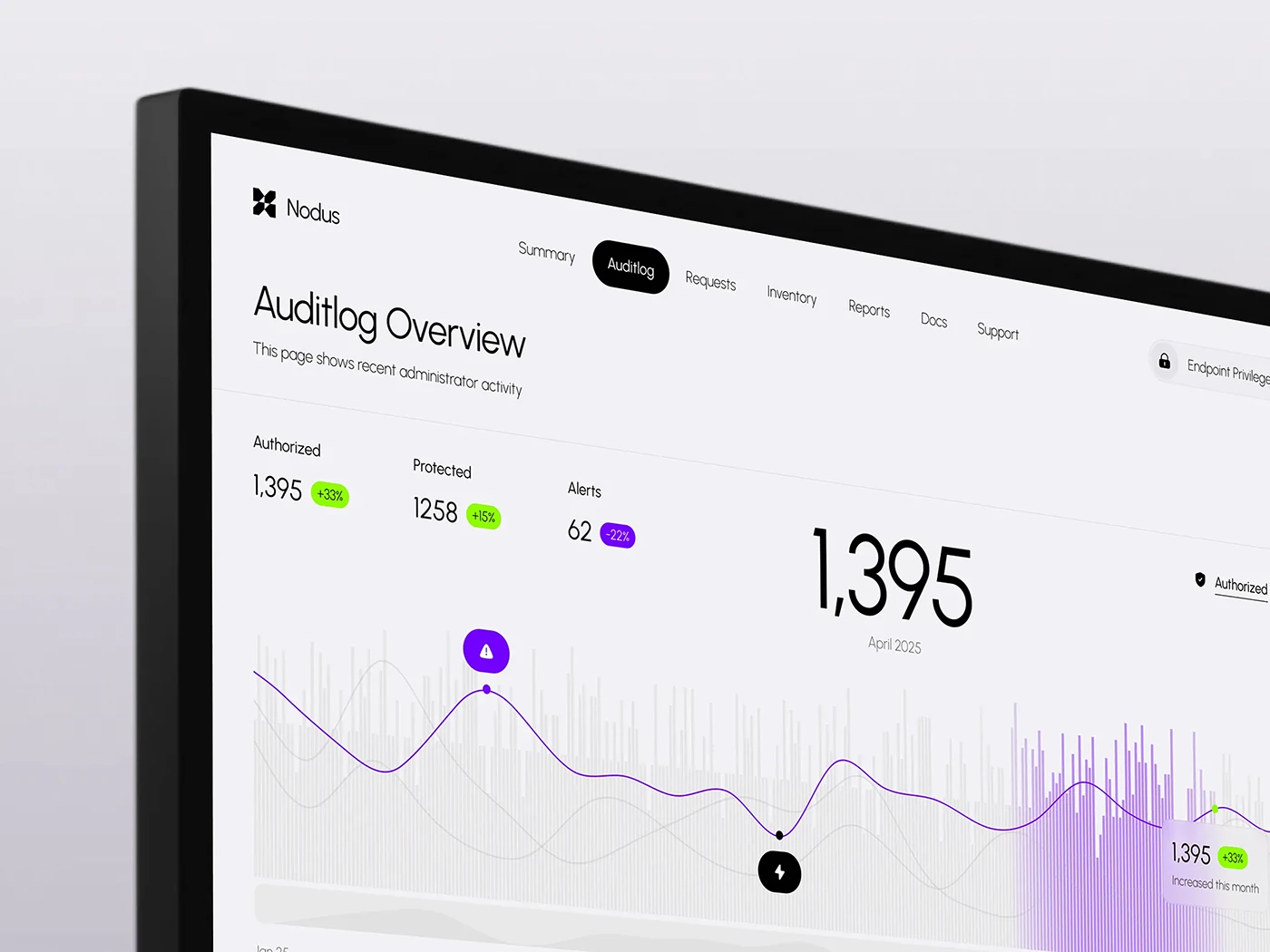
When receiving a dashboard or PDF, look for the connection between summary, observation, action and verification. A green counter can make information easier to read, but you need to know what it counts and which period it describes. Good presentation is welcome; the report must support a concrete decision.
Separate cleanup, rebuilding and data preservation
A backup restoration may recover availability while also rolling back newer orders, enquiries or edits. Ask which records will be preserved and who decides how to recover anything missing. Restoration does not, by itself, close the entry route.
If licences, replacement of an abandoned component or rebuilding an integration are required, ask for those items to be identified. Establish whether they are necessary for acceptance or recommendations for later. Approving a specific extension is easier than discovering a dependency at the end.
Where the incident goes beyond website cleanup, ask the proposal to identify the specialist work needed and who coordinates it. Do not assume investigation of every account, device or data issue is included merely because WordPress repair has been commissioned.
Read the guarantee as a specific service
Ask what recurrence cover provides: assessment, another cleanup, an initial response or periodic monitoring. Establish the duration, start date, requirements, exclusions and reporting channel. Cover depending on particular components remaining in place requires both parties to understand who can change them.
Distinguish recurrence of the incident, a different infection and compromise of another account. Ask how those situations will be assessed before a new invoice. A comprehensible guarantee explains which work will be repeated; it does not make the website immune to future attacks.
Google and hosting have their own review processes
Google’s Search Console Security Issues documentation explains review after problems have been corrected. Separate submitting a request, receiving a decision and recovering visibility. The supplier can commit to its own deliverable; an external decision is not entirely under its control.
If hosting maintains a suspension, ask for its reopening criteria and assign responsibility for the evidence. Keep the request reference, date and status. “Blocklist removal included” needs to specify what will be submitted and what remains subject to third-party review.
Check the business and agree follow-up
Define acceptance journeys: public navigation, forms, access, languages and relevant store functions. Payment tests require an authorised procedure. Repeat the original reported condition and document anything that could not be reproduced.
Separate that acceptance from ongoing maintenance. Updates, backups, monitoring and future response need their own scope. Ask who receives alerts, what they do with them and how a meaningful change is reported. A dashboard showing activity is not a substitute for a responsible person.
Compare the fee and the clock against that scope
Separate the initial assessment, approved cleanup, replacement licences and continuing care. Ask whether the quote is fixed for the defined scope or time-based with an approval boundary. Neither format resolves an unclear scope. List optional and necessary items beside the amount so the apparent cheapest offer is not missing required work.
Distinguish first response, start of investigation, restoration of service and final acceptance. Ask when each clock starts: enquiry, confirmed access, available backup or approval. A response promise is not automatically a completed-cleanup promise. Record dependencies on hosting or external accounts alongside the supplier’s own commitments.
For recurring work, establish the billing period, included activities and what happens after the initial intervention. Keep the one-off repair and the ongoing service identifiable. That makes the budget usable beyond the day the incident disappears from the screen.
Should I ask hosting before buying another cleanup?
Yes: establish what its existing service includes, what it already inspected and which reopening criteria it requires. A host may supply useful evidence without covering application recovery. Share the answers with the specialist so the two teams can coordinate rather than unknowingly duplicate or contradict changes.
What if someone already cleaned the site?
Provide their change record and the conditions under which the symptom returned. Ask the next proposal to distinguish recurrence investigation from a fresh cleanup. Missing earlier evidence should remain visible. Starting over without that history can repeat the same correction while leaving the unresolved dependency untouched.
Send a brief that can be quoted
Summarise the URL, symptom, timeline, known installations, critical functions, recent changes and hosting provider. Identify the approver and any restrictions on intervention. Share reviewed evidence; access is arranged afterwards through the appropriate channel.
To request a WordPress malware removal quote, start with that context. Malware Cleanup can review the report and define the next step through its assessment process. The aim is straightforward: understand what will be done, what you will receive and what will remain outstanding before saying yes.